

Workshops
Workshops help you improve your own practice as a creative artist, technologist, or designer! These hand-on workshops are tied to the arts and tech hackathon theme, and some will encourage you to add a project to our pop-up showcase exhibition. Learn, connect with other creative folks, and share! Workshops are scheduled for 2-3 hour sessions with 8-12 people attending. We will also have three open-format Tactile Stations for even more hands-on experiences. See below.
Workshop Schedule Overview:
| DAY | WARHOL ROOM | POLLOCK ROOM |
|---|---|---|
| Thursday March 26 | 1:30pm to 4:30pm Workshop 1: Part I: Bootstrapping Interactive Installations with MIDI Grant Hinkson 5:00pm to 8:00pm Workshop 3:Drawing Mandalas with Code in p5js Sabin Timalsena | 1:30pm to 4:30pm Workshop 2: Unity VFX Graph Tutorial Jose Contreras 5:00pm to 8:00pm Workshop 4:Hands-on 3D Modeling with Blender Nicole Ruggiero & Sam Clover (Raycaster Studio) |
| Friday March 27 | 11:00am to 1:00pm Workshop 5: Nomadic Augmented Happening Jeff Brice and Genevieve Tremblay 2:00pm to 6:00pm Workshop 7: Systems for Humans Justin Lincoln 7:00pm to 9:00pm Workshop 9: Code by Vibes 🏄🌊 New Technique for Digital Fabrication Joshua Lind | 11:00am to 1:00pm Workshop 6: Intro to Motors for Artists Andrew Cole 2:00pm to 5:00pm Workshop 8: Creating Generative Art for Plotters and Drawing Machines Maks Surguy 7:00pm to 10:00pm Workshop 1: Part II: Bootstrapping interactive installations with MIDI Grant Hinkson |
| Saturday March 28 | 11:00am to 2:00pm Workshop 10: Projection Mapping Alex Miller | 11:00am to 1:00pm Workshop 11: Programmable Light Art with COB LEDS Shelly Farnham |
See full hackathon schedule here.
Full Workshop Descriptions:
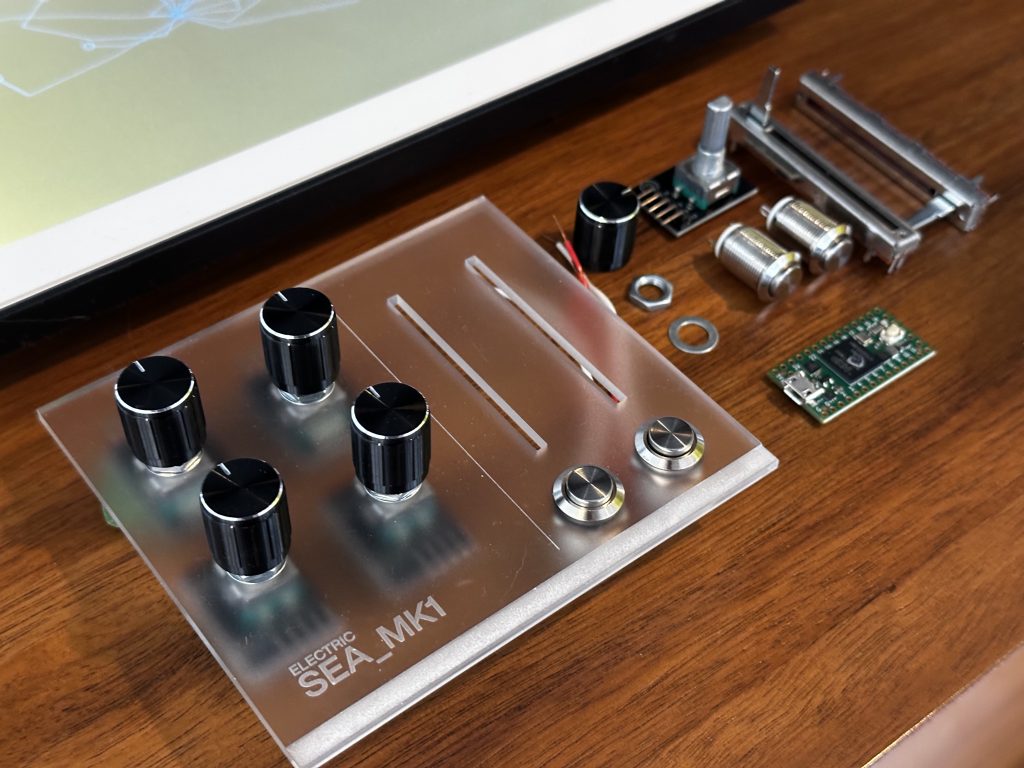
Workshop 1: Bootstrapping Interactive Installations with MIDI
Thursday, March 26, 1:30pm to 4:30pm, Warhol Room (Part I)
Friday, March 27, 7:00pm to 10:00pm, Pollock Room (Part II)
Lead: Grant Hinkson
This workshop introduces (and demystifies) participants to the core elements of building an interactive art installation. The workshop starts by building a simple Arduino-based MIDI controller that includes several multi-purpose inputs (e.g. rotary potentiometers, sliders, buttons). Once built, participants will confirm hardware is working with a simple pre-built web-app debugger. Participants will then be shown how new coding tools such as Claude and ChatGPT can be used to rapidly bootstrap a dynamic, web-based art piece using libraries such at p5.js, threejs, etc,. Finally, hardware input will be tied to parameters of the software to create an installation that responds to user input.
Pre-requisites: Laptop, Claude and/or ChatGPT account created
Grant Hinkson is a multi-disciplinary technologist, artist, musician, entrepreneur, and design leader with a background that spans design, software development, prototyping, and music composition. As founder of Parietal Lab (2024-present) Grant launched the VR experiences CONNECTOME and CONSTELLATIONS on the Meta Quest platform as a solo indie dev. Prior to this, Grant was Head of Design Engineering within Amazon’s Devices and Services Design Group.
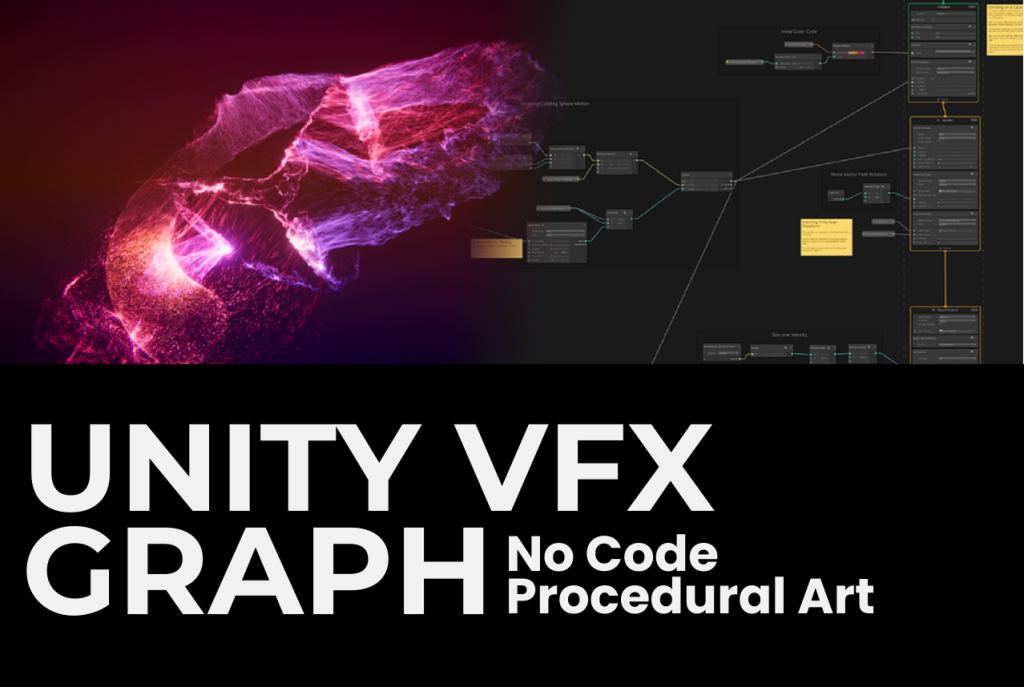
Workshop 2: Unity VFX Graph Tutorial
Thursday, March 26, 1:30pm to 4:30pm, Pollock Room
Lead: Jose Contreras
Learn to bend millions of vfx particles to your will with a node based system. No coding skills required. You can use this to create interactive art installations, beautiful game effects or other simulations.
Pre-requisites: Laptop with Unity installed
Jose Contreras is aTechnical Artist turned Creative Technologist & XR Prototyper currently at Meta. 10+ years of experience spanning AAA games, big tech, and innovative startups. Jose enjoys fast paced creative environments where anything is possible. His work blends deep technical expertise with creative exploration, crafting experiences using shaders, AR, VR and AI.
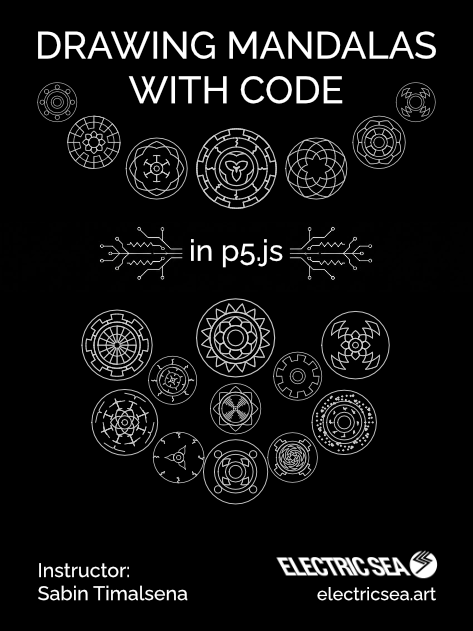
Workshop 3: Drawing with Code with p5js
Thursday, March 26, 5:00pm to 8:00pm, Warhol Room
Lead: Sabin Timalsena
Drawing with code with p5js, focus areas: Thinking in 2D, geometry for making patterns, introduction to parametric curves. A scaffolded project will be provided where all the “boring set up work” is done, and participants can start designs with as little as 4 lines of code, and can add complexity to it as the workshop progresses. Example exercises include: composable patterns like mandalas, spirographs, and tiled patterns that aim to provide a deeper understanding of the principles involved in 2D geometry.
Pre-requisite: Laptop
Sabin Timalsena is an algorithmic artist and computer graphics researcher whose work unites technical innovation with creative expression. Working with algorithms and real-time graphics, he explores procedural geometry, algorithmic botany, emergent systems, parametric structures, and immersive XR experiences. His work spans peer-reviewed research in geometry processing, game development, and AR/VR experiences and installations.
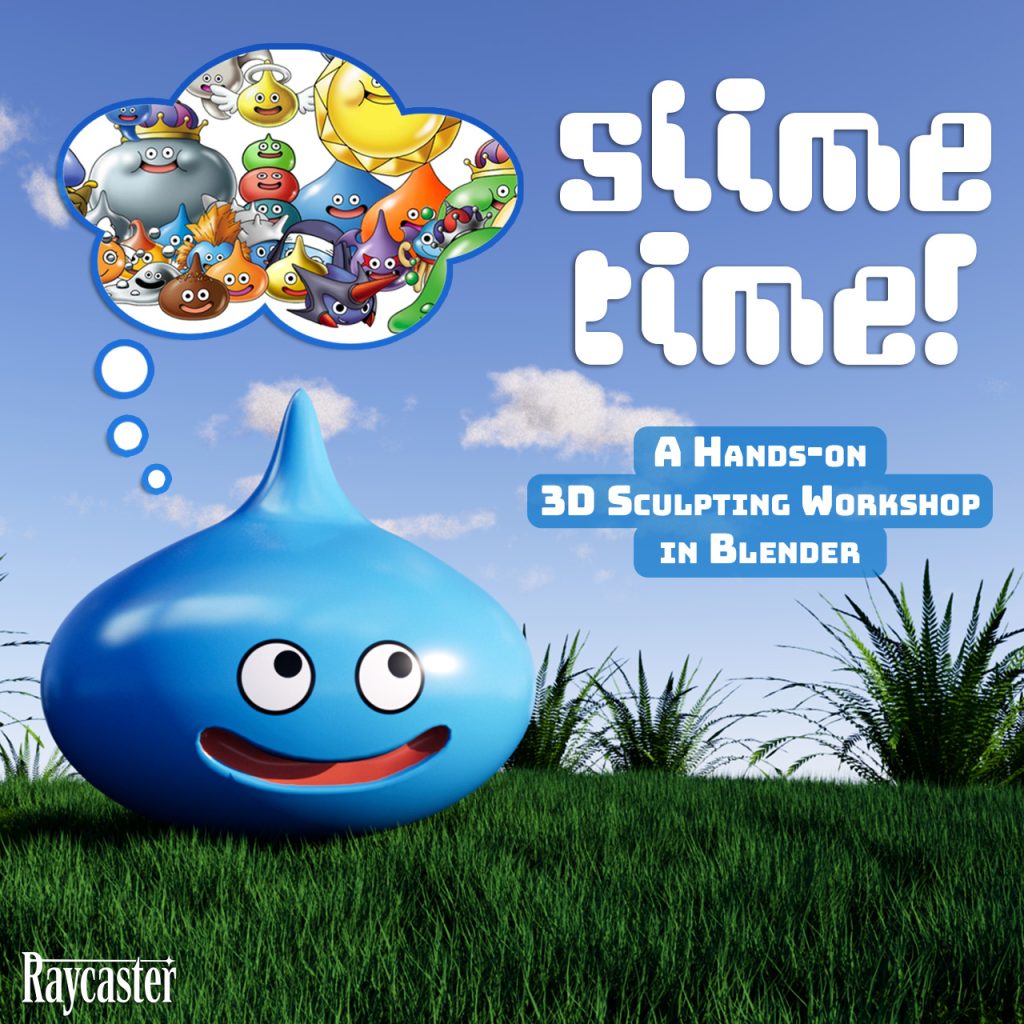
Workshop 4: Slime Time!: A Hands-on 3D Sculpting Workshop in Blender
Thursday, March 26, 5:00pm to 8:00pm, Pollock Room
Leads: Nicole Ruggiero & Sam Clover (Raycaster Studio)
This workshop will teach participants how to sculpt and paint a basic model in Blender. The workshop will be able to assist any hackathon themes that involve 3D models including VR, AR, games, animations, interactive artworks, or 3D printing. We will briefly go over auto-UVing and baking textures for export at the end of the workshop.
Pre-requisites: Laptop with Blender installed, computer mouse (trackpads will not work well for this), see Blender minimum computer specifications. Optional: drawing tablet.
Nicole Ruggiero has shown in galleries such as The Hole NYC, Christie’s Dubai, HEK Basel Switzerland, Kunsthalle Dusseldorf Germany, Bronx Art Space NYC, and many more. Nicole has taught workshops and has given talks at Makers Fest, India, Tokyo University, VR Expo Miami, SVA NYC, Daytona State University, and ECAL University in Switzerland.
Sam Clover has shown at the Oculus NYC, LA Art Show, and West Chelsea Contemporary NYC. Their combined client list includes Meta, Samsung, T-Mobile, MTV, Microsoft, Lady Gaga, Charli XCX, Porsche, and more.
Raycaster Studio is a fine art, animation, and digital sculpture studio run by Nicole Ruggiero and Sam Clover.
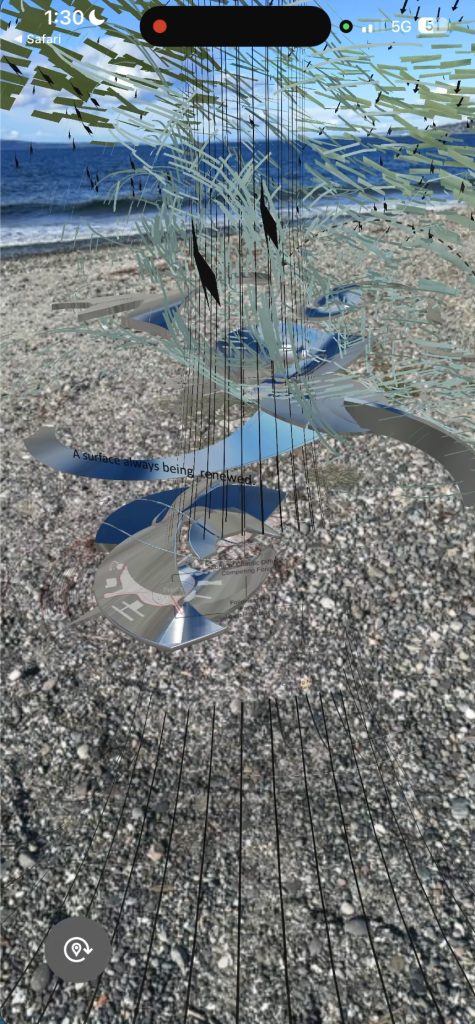
Workshop 5: AR: Nomadic Augmented Happening
Friday, March 27, 11:00am to 1:00pm, Warhol Room
Leads: Jeff Brice and Genevieve Tremblay
Participants in Nomadic Augmented Happening hands-on workshop will create an emergent augmented reality (AR) interpretative documentation of the Electric Sea Hackathon. Photos, drawings, 3d objects and scans, captured audio and video taken or created during the hackathon will construct a virtual experience and will walk away with the qr code making it nomadic. Participants will learn general AR workflows, technical demands of AR, and the workflow of Mattercraft platform for interactive, web-based AR experiences. This project is inspired by the art Happenings of the 60’s and in particular Experiments in Art and Technology.
Pre-requisite: Laptop
Jeff Brice is an artist, collaborator and nomadic designer. I sit on the board for Third Place Technologies. I am adjunct faculty at Cornish College of the Arts/Seattle University in the design department. I recently helped create the PNW Art and Technology Symposium at Cornish 9th Street gallery. Current projects include an artist in residency at SECOS, Chile to produce 2 augmented murals at Tubul and Tongoy, Chile.
Genevieve Tremblay is a digital and immersive artist, educator, community leader and catalyst working across disciplines and sectors to bring vision and clarity to innovative cultural initiatives. Her generative work as a digital, interactive and immersive media artist is focused on environmental themes. Her curatorial programs at the intersection of arts, science and technology have been funded through grants from Bellevue Arts Program, 4Culture, The Rockefeller and Benton Foundations, Helen R. Whiteley Foundation, Oregon Arts Commission, The Ford Foundation, Stillman Drake Fund, Elizabeth Firestone Graham Foundation, Universidad Católica de la Santísima Concepción, UCSC Cultura and the US Embassy, Chile. She is a member of SOIL Gallery in Seattle.
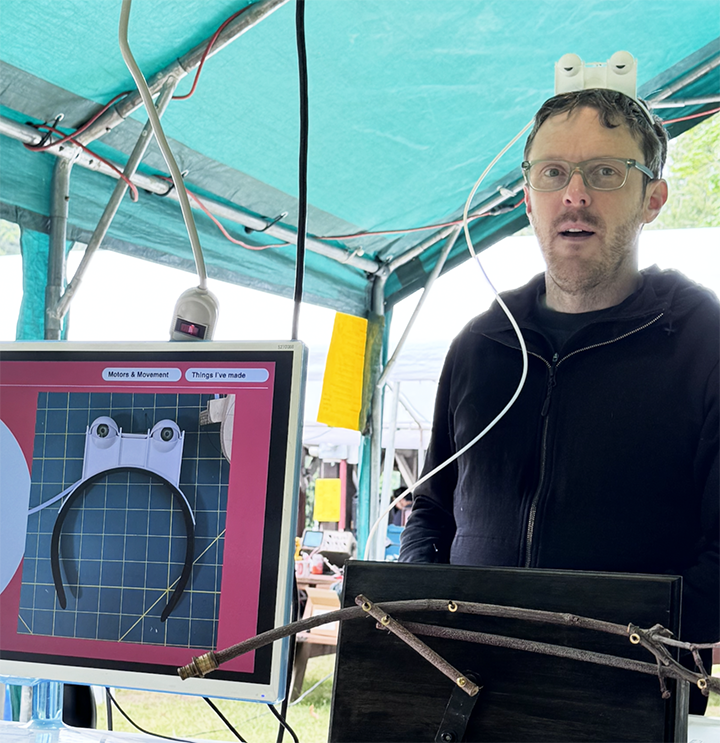
Workshop 6: Intro to Motors for Artists
Friday, March 27, 11:00am to 1:00pm, Pollock Room
Lead: Andrew Cole
We start with a 60ish minute lecture and demonstration of the many types of motors available to artists for their work. Aimed at the beginner, assuming no particular knowledge of motors or electronics. After the lecture, participants will each make a small cardboard robot with a single servo actuator to take home with them. No soldering required- just tape and glue to form the body of the robot. Batteries included!
Andrew Cole is an artist based in Seattle fascinated with mechanisms, light, illusion, and hidden complexity. He creates work both independently and as part of the collective Totally Legit. His art has been exhibited at Passable, Vermillion, Lynn Hanson Gallery, A/NT Gallery at Bumbershoot, Electric Sky, Critical Northwest, and Seattle Mini Maker Faire. Additionally, he teaches electronics workshops for beginner to intermediate enthusiasts a few times a year.
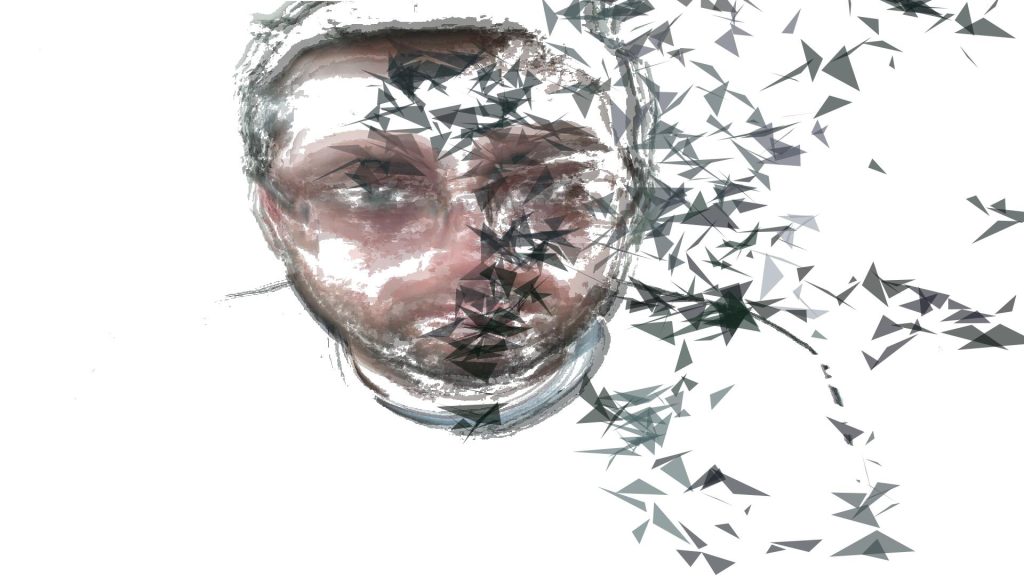
Workshop 7: Systems for Humans
Friday, March 27, 2:00pm to 6:00pm, Warhol Room
Lead: Justin Lincoln
Systems for Humans is a hands-on workshop that equips interdisciplinary hackathon teams with practical tools for collaboration, rapid ideation, and creative technology prototyping. Participants learn lightweight methods from human-centered design and systems thinking to align projects, scope effectively, and iterate using feedback loops. Through shared moodboarding, system mapping, and vibe coding workflows, teams translate ideas into actionable project plans they can apply during ElectricSEA. The session is supported by a collaborative workbook and online digital templates that continue guiding projects throughout the hackathon.
Pre-requisites: Laptop
Justin Lincoln is a Seattle-based creative technologist, artist, and former professor whose work explores the intersection of art, systems thinking, and collaborative technology. He co-founded the Human-Centered Design concentration at Whitman College and has spent over a decade teaching creative coding, interactive media, and interdisciplinary design. His practice integrates generative systems, feedback loops, and experimental toolbuilding, with a focus on helping creative teams align, prototype, and iterate effectively. He is currently developing Systems for Humans, a framework for building better collaborative creative technology projects.
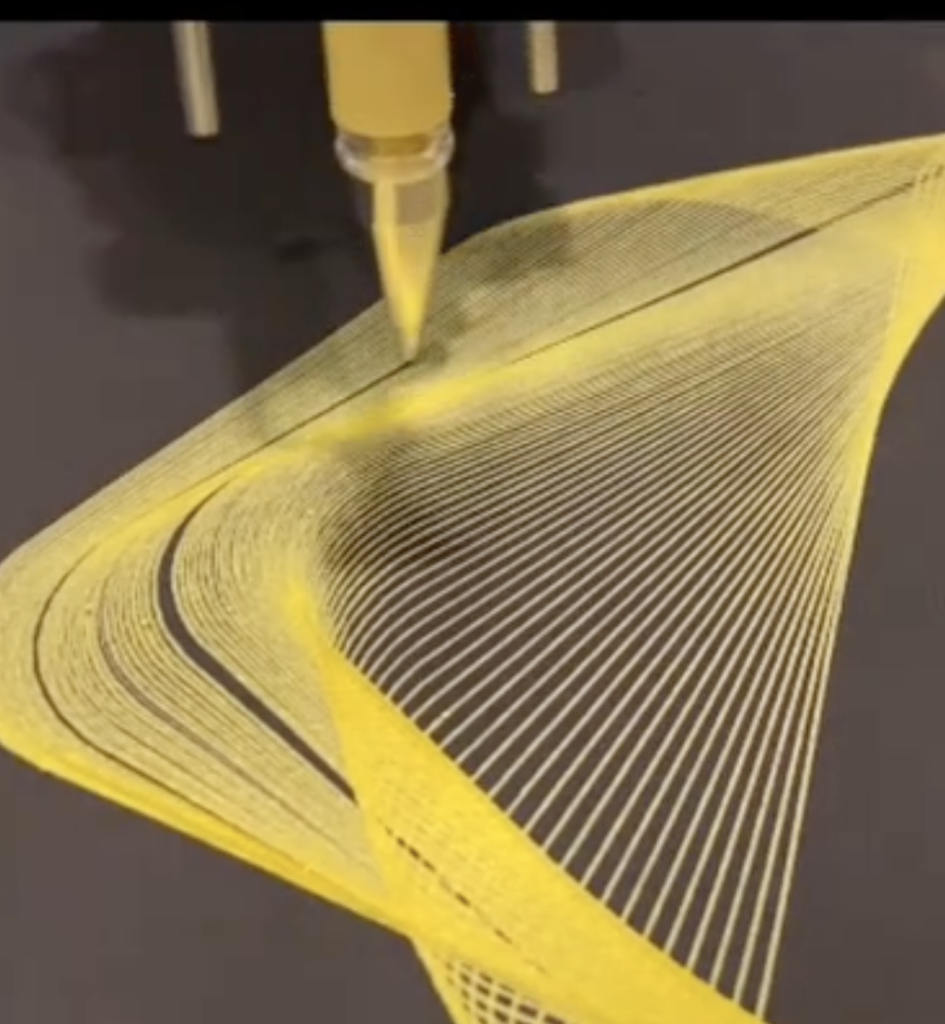
Workshop 8: Creating Generative Art for Plotters and Drawing Machines
Friday, March 27, 2:00pm to 5:00pm, Pollock Room
Lead: Maks Surguy
In this workshop Maks will guide participants how to design and create artwork for plotters and 2D CNC machines. Participants are encouraged to bring a laptop. We will get inspired and code together. After the learning session, we will plot your creations using a drawing robot (plotter).
Pre-requisites: Laptop
Maks Surguy is a generative artist and design technologist based in Tacoma, Washington. Using code and no-code tools, Maks creates generative artworks that can be represented in physical and digital mediums. His art is influenced by mathematical concepts and algorithms underpinning the physical world and by patterns found in living organisms. Maks is known for building and leading online communities for plotter enthusiasts, such as DrawingBots and PlotterFiles.
Workshop 9: Code by Vibes 🏄🌊 New Technique for Digital Fabrication
Friday, March 27, 7:00pm to 9:00pm, Warhol Room
Lead: Joshua Lind
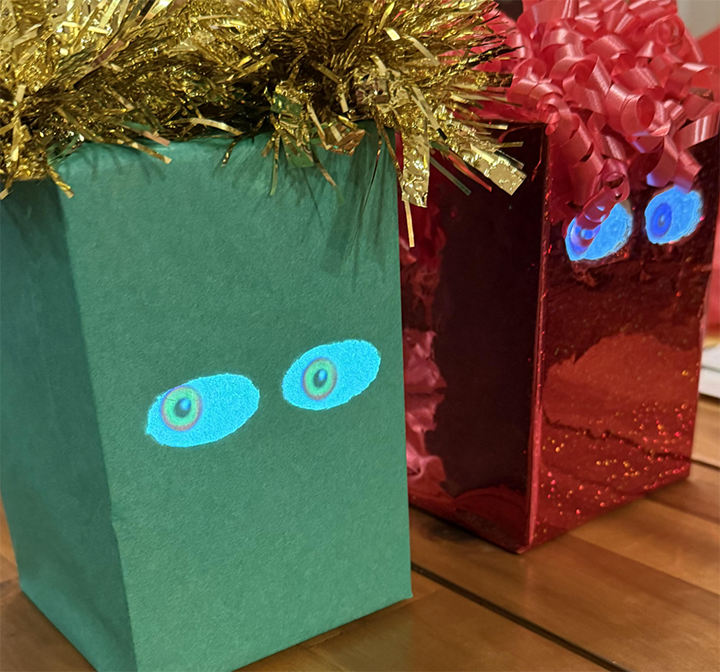
Learn to use AI coding to make new artistic things or manage your portfolio.
Pre-requisites: Laptop
Joshua Lind builds web systems for startup teams and gets to work on UX with open-source tools. For fun, he makes interactive art installations and tries for creative use of technology. From WA, now on Camano Island.
Workshop 10: Projection Mapping
Saturday, March 28, 11:00am to 2:00pm, Warhol Room
Lead: Alex Miller
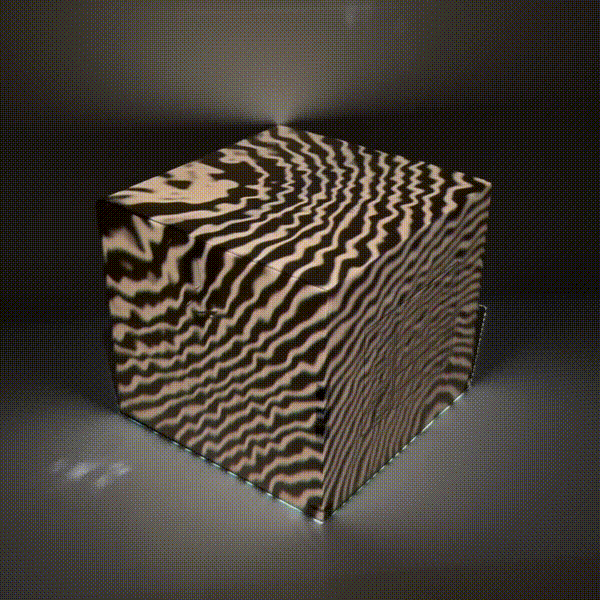
Projection Mapping is the practice of making objects come alive with projected light. In this workshop, we’ll learn the foundations of how projection mapping works under the hood, how to design and fabricate objects suitable for projection mapping, then we’ll code our own projection mapping design using the open source Shape Mapper library.
Pre-requisites: Laptop (preferably with HDMI output), Processing installed (https://processing.org/), Blender installed (https://www.blender.org/), Optional: bring an object that you want to projection map; very simple objects work best (e.g. a cardboard box), we will provide objects for those who don’t bring one.
Alex Miller is a software developer and artist, currently working at Runway. He has previously worked at Audere, University of Washington, Google, and Youtube. He makes art under the name SPACEFILLER, frequently with collaborators.
Workshop 11: Programmable Light Art with COB LEDS
Saturday, March 28 , 11:00am to 1:00pm, Pollock Room
Lead: Shelly Farnham
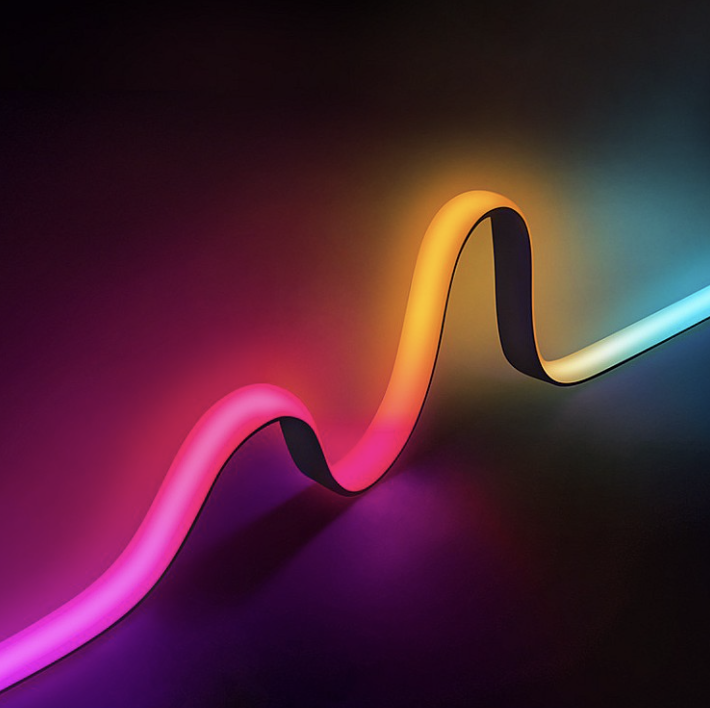
Participants will get their own kit to create an art lamp! They will get hands-on experience programming COB LED strips, attached to a metal armature (1 “EMT”) and a base they will be able to bend for creating abstract light art forms. Throw your creation in the showcase exhibition and/or take it home!
Pre-requisites: Laptop, with Arduino IDE installed. See https://www.arduino.cc/en/software/#ide and dowload arduino IDE v. 2.3.8
Shelly D. Farnham, Ph.D is the founder and President of Third Place Technologies. She’s an artist, creative technologist and community organizer with extensive experience in innovation labs and art/tech groups. She has a special passion for all things LEDs and will share this passion with you at this workshop.
Tactile Stations
Tactile stations will be set up in a dedicated room in an open-schedule format, and provide our hackathon attendees more hands-on experiences and resources to draw from for their ElectricSEA projecting. Stations are first-come first-served, as supplies are limited.
Tactile Station 1: Peephole Dioramas
Friday and Saturday, Picasso Room
Lead: Loren Ponder
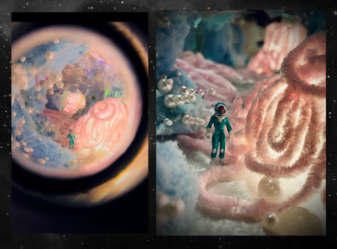
Construct a miniature light-up tableau out of new and recycled materials. Learn how to create the illusion of depth inside your secret world using perspective, composition, mirrors, and a fisheye lens peephole.
Pre-requisites: Participants can bring a shoebox and any small items or toys they might want to incorporate into a diorama.
Ribbit (Loren) is a multidisciplinary visual artist who loves to create imaginative, thematic installations and strange creatures. Using paint, sculpture, lights, textiles, and other disparate ingredients Ribbit strives to explore their creativity in fresh and exciting ways with every new project.
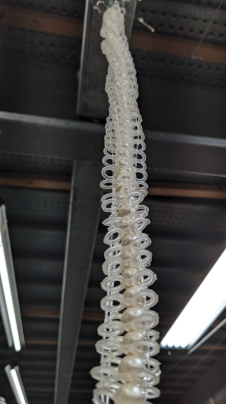
Tactile Station 2: Tangled in Tentacles – Kinetic Wearable Art
Friday and Saturday, Picasso Room
Lead: Brooke Fotheringham
Learn how to design fluidly moving appendages and incorporate them into accessories, clothing, and costumes. Work on your own project or create a tentacle scarf.
Brooke Fotheringham is a Seattle-based multimedia artist with an educational foundation in biology, photography, installation art, and costume design from The Evergreen State College and Pacific Northwest College of Art. Brooke delights in both exploring novel uses of materials diverted from the waste stream and inviting viewers to slow down and contemplate the architecture of life at the edge of our ability to perceive by exaggerating the scale of microscopic organisms. Her practice has evolved over time from photographic abstractions toward hybrid installations, biomorphic assemblages, and interactive sculptural experiments incorporating textile and light. Her visual research frequently channels curiosity about biomimetic design, experimental architecture, and adaptive materials. Brooke is passionate about skillsharing and making art an accessible community activity. Volunteering with the Fremont Arts Council she has enjoyed sharing as well as learning skills and drawing inspiration from fellow artists.
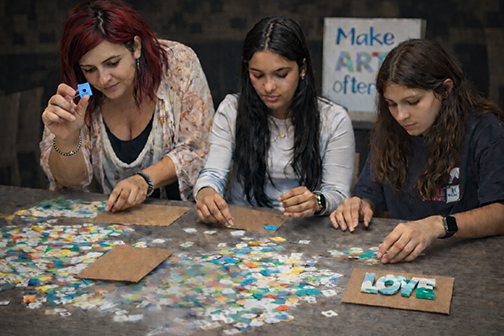
Tactile Station 3: Tag Humanity
Friday and Saturday, Picasso Room
Lead: Alexandra “Lexa” Manuel
Tag Humanity is an art and civic activation that transforms everyday experiences and labels into tools of care, resistance, and visibility. Through a hands-on creation station inspired by Lexa Reclaims, participants use upcycled bread tags to create small pieces of art that recognize acts of humanity in their communities. These physical tags connect to a live collaborative photomosaic where participants upload images and stories in real time. As submissions grow, they form a larger collective image and a geotagged digital archive of care, courage, and collective responsibility.
The tactile art station and live photomosaic can travel to events, hackathons, conferences, and community spaces, blending fabrication, digital storytelling, and mapping to make visible what often goes unseen.
Alexandra Manuel is a reclamation-based artist and systems builder working at the intersection of participatory art, youth leadership, and civic storytelling. Using discarded bread tags as a core material, they melt and fuse fragments into unified forms that explore identity, fragmentation, and collective power. Their work centers on youth leadership, activism, and movement building, transforming overlooked materials and overlooked voices into visible civic presence. Alongside their studio practice, they have led digital arts initiatives, developed youth empowerment toolkits, and served in executive leadership in education and the arts, scaling creative ideas into durable civic infrastructure.
Workshop Registration
Space is limited, so please sign up for workshops in advance to save your spot! Mark the workshops you want to attend in the checkout form during your Electric SEA event registration in Eventbrite.
IF you have already registered for ElectricSEA, sign up for workshops as follows:
- Sign back into your account at eventbrite.com
- Then click on [Tickets] ->
- Select [Electric SEA] ->
- Click on [view complete attendee info]. You’ll see your General Admission info.
- Click [edit] to the upper right
- Select your workshop(s) from the list
- click on [save]
- You are good to go!
Because space is limited, we recommend you only sign up for two workshops.