

Projects
THE 2026 EVENT IS NOW PAST.
FIND PHOTOS HERE, OR CHECK OUT THE FULL LIST OF SHOWCASE EXHIBITION PROJECTS HERE
Projects at the Showcase Exhibition
At the ElectricSEA showcase exhibition, you will find arts and tech projects of all shapes and sizes — small and big, rough and polished, individual efforts or large-scale collaborations. These will be the projects that came out of the ElectricSEA creative hackathon, and who knows what will spontaneously emerge from this highly creative arts and tech community? Everyone is welcome to attend the showcase exhibition, even if you did not join the hackathon. However, we suggest you register because space is limited. Register on Eventbrite to save your spot.
Project Prizes: The Src Material Awards
We are pleased to announce the Src Material Awards at Electric Sea, which will be awarded to two exceptional projects during the event. The awards will recognize a First and Second Prize, honoring projects distinguished by their innovation, strength of execution, and depth of collaboration. The Electric Sea committee and Src Material are particularly excited by work that innovates beyond “accepted” notions of technology, demonstrates clarity and rigor in its realization, and fosters meaningful interdisciplinary exchange or new communities of practice. Electric Sea cultivates space for ambitious experimentation, and Src Material is proud to support artists advancing the field with curiosity, integrity, and technical imagination.
The awards will be presented on Saturday during the showcase exhibition at 8:30pm. Eligibility: project grantee recipients and members of the ElectricSEA organizing committee are not eligible for these prizes.
- 1st prize: $500 for the most exciting and innovative project
- 2nd prize: $250 for the best collaboration – best team effort with interdisciplinary participation
Src Material is a Seattle-based creative technology nonprofit functioning as a connective and curatorial force linking artists, technologists, thinkers, and institutions.
How do Hackathon Attendees Become a Part of a Project
As a hackathon attendee, you can show up with just your ideas to pitch, your skills to share, OR bring a half-finished project for which you hope to find help to finish. You can also show up with supplies you would like to use — such as some electronics, craft supplies, or your laptop and a projector. In the hackathon style, the emphasis is on the creative process, collaboration, knowledge sharing, and interdisciplinary connections.
To help you make these connections and join up with a project, be sure to attend the Orientation, Team Formation, and Project Updates meetings. At these meetings, you will be able to pitch ideas, share how you might like to help, or join an emergent team based on shared interests. Ideally you would attend our first orientation meeting Friday morning at 10am, but if you cannot show up until Friday evening or Saturday morning, you will still have a great experience. See schedule here. For knowledge sharing and to seed projects, we also host 11 exciting workshops and 3 tactile stations.
Granted Projects
We are supporting several projects through grants to help cover material costs — projects likely to be highly engaging for the community during the hackathon and/or at the showcase exhibition. These grants were distributed through a juried, selection committee process. We are very excited to share below our list of project grant recipients!
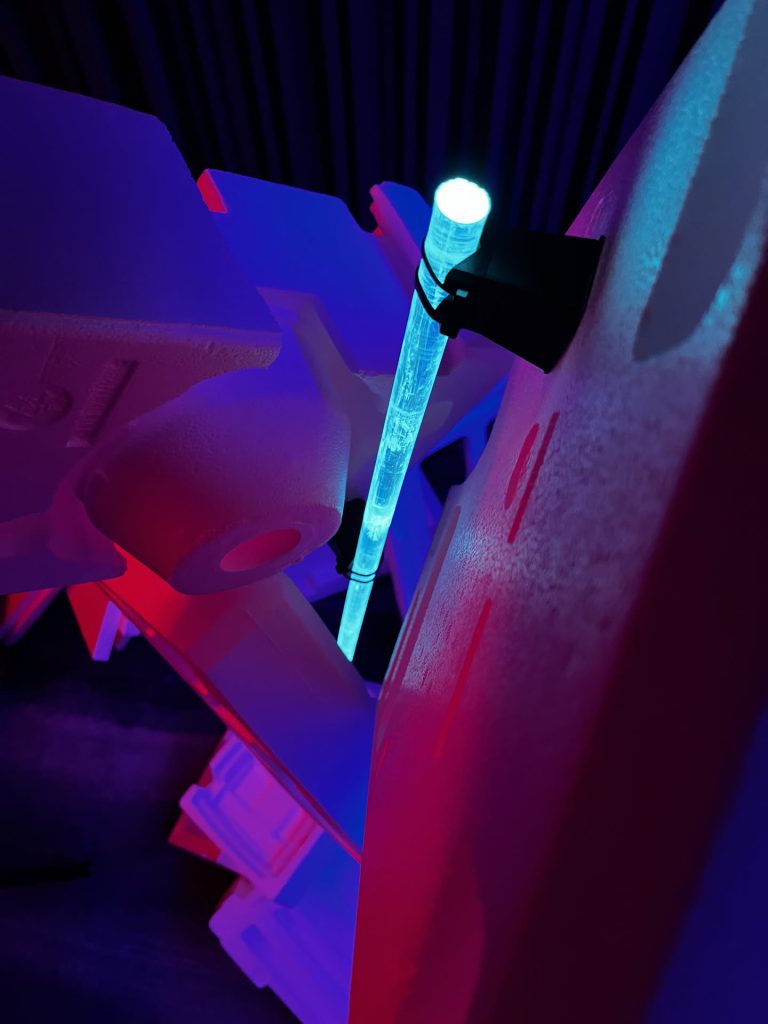
echodendron
Jacob Buys
A forest of sounds balanced on beams of light absorbs and integrates everything it hears.
Jacob is a multidisciplinary artist working primarily with interactive installations with sonic and lighting elements that evoke surprise and delight. Recent collaborations include: “Quantum Putt” at BaseCamp Studios, “Imprints” at the Seattle Design Fest, and “Infunity Gate” at Electric SKY 2025. @arithmeticulous
Creating Generative Art for Plotters
Maks Surguy
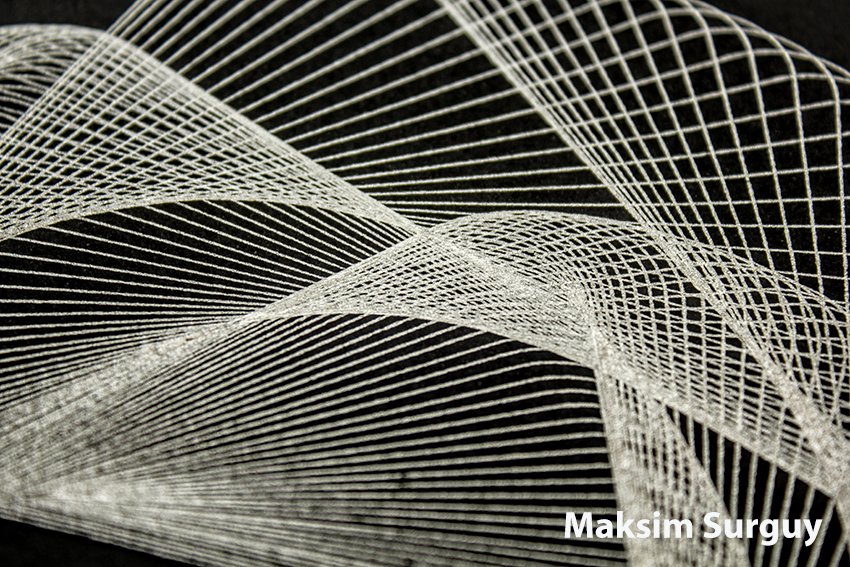
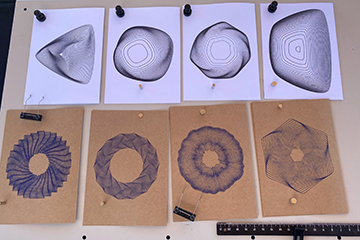
In my plotter workshop, participants will learn about basics of creating graphics and artwork for plotters. We will learn how to think “generative art”, and plot some of the participants creations after the learning session. In conjunction with the plotter workshop where I will bring my own plotter, I will build an additional wall hanging plotter that participants can also use and generate content live at the showcase exhibition. Paper and pens will be provided.
Maks Surguy is a generative artist and design technologist based in Tacoma, Washington. Using code and no-code tools, Maks creates generative artworks that can be represented in physical and digital mediums. His art is influenced by mathematical concepts and algorithms underpinning the physical world and by patterns found in living organisms. Maks is known for building and leading online communities for plotter enthusiasts, such as DrawingBots and PlotterFiles. https://makssurguy.com/
Three Phones, Three Personalities
Nicole Ruggiero & Bjorn Stange
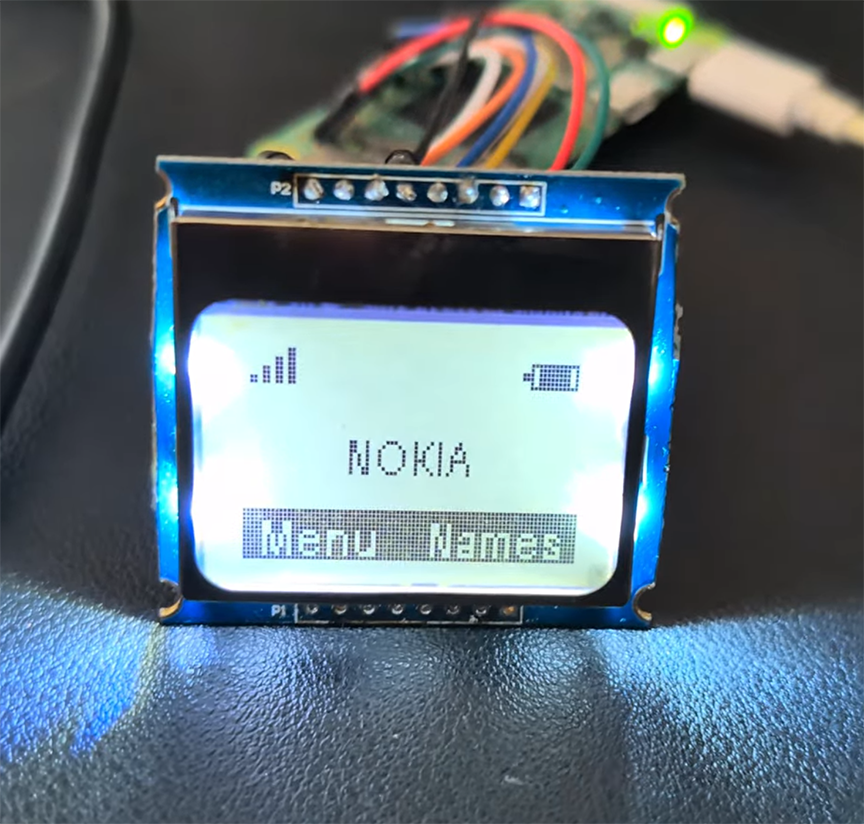
Nicole and Bjorn have been working on an interactive art piece that involves three retro Nokia 3310 phones that converse with her lost family members through text messages on their screens. Each is powered by an LLM and has a custom back-lit LED screen powered via Raspberry Pi Zeros. The concept involves written texts to deceased relatives. I lost my entire family over the past 10 to 15 years. The messages capture interpersonal moments from the same period when the Nokia 3310s were popular.
Nicole is a 3D artist who makes artwork about digital connections and nostalgia. She has shown in galleries such as The Hole NYC, Christie’s Dubai, HEK Basel Switzerland, Kunsthalle Dusseldorf Germany, Bronx Art Space NYC, and many more. Her client list includes T-Mobile, MTV, Microsoft, Lady Gaga, Porsche, The New York Times and more. https://nicoleruggiero.com/
Bjorn Stange works in cybersecurity as a site reliability engineer. He has been involved in the tech industry since 2010 and has been tinkering with computers and programming since 2005. He is passionate about open source software and helping others solve problems through technology. https://github.com/Bjorn248
Wearable Polarized Displays
Alicia Guo
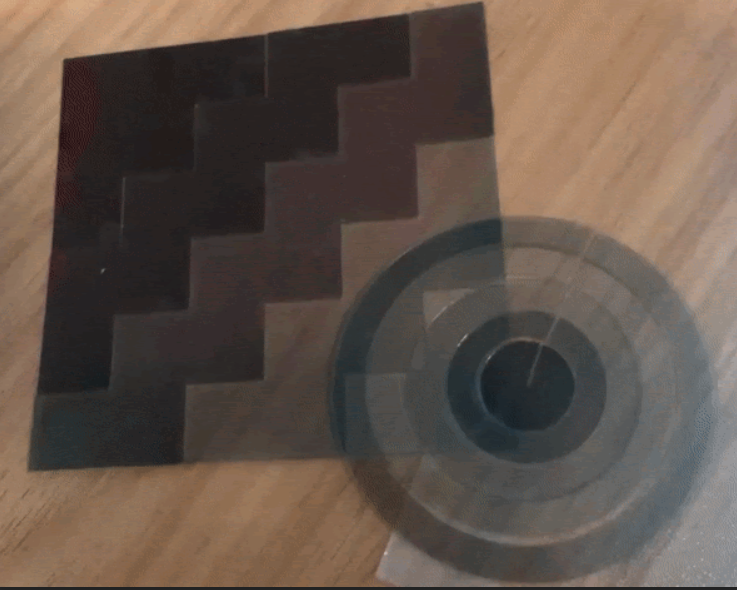
This project is an experiment with making wearable pieces using rotated polarizing film so that patterns and animations are only visible through rotating polarized glasses. Different sections of the garment will be cut at different angles, so as someone rotates their lenses, hidden images appear, disappear, or shift. During the hackathon I’ll be experimenting with fabrication techniques and building rotating viewing glasses so people can activate the visuals themselves. As a stretch goal, I’m exploring adding small servo motors that rotate a few panels on the garment, allowing parts of it to animate or be programmed to move through different orientations.
Alicia Guo is a computational artist, poet, and researcher based in Seattle. Her work involves creating poetic experiences through interactive text, blending physical and digital spaces of collective creation on the internet. Her work has appeared in Graywolf Lab, Taper, The HTML Review, and Crawlspace. https://aliciaguo.com/
Radiolarian
Becca Priddy / Shiny Design Lab
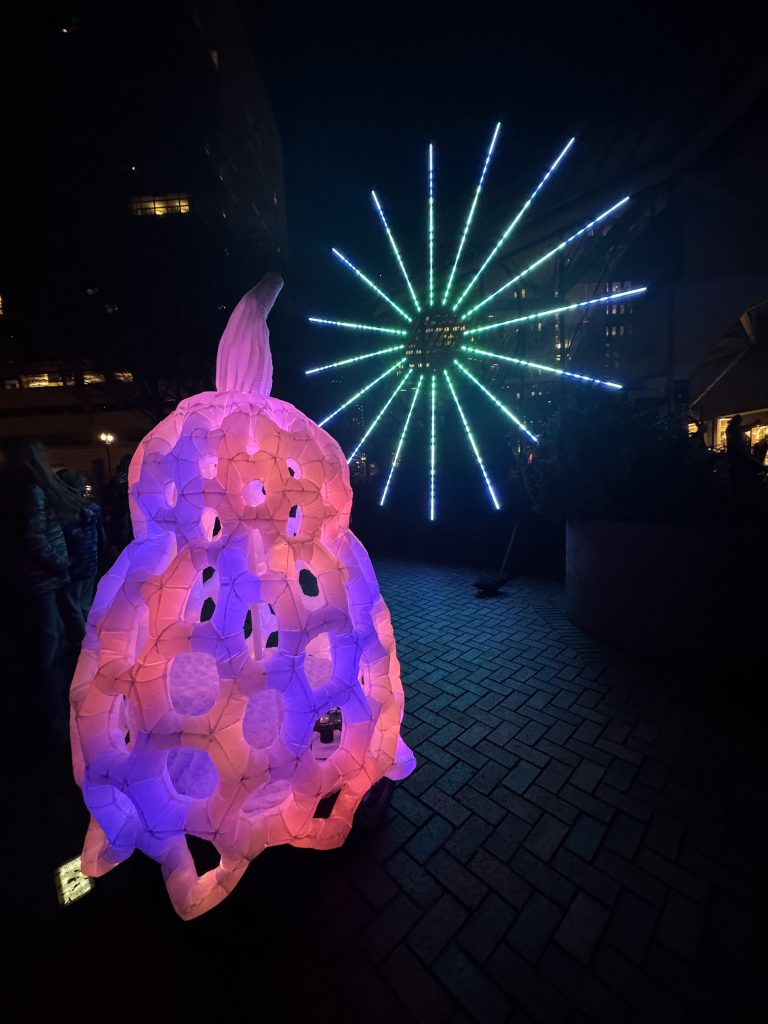
Radiolarian is an inflatable scale model of a microscopic ocean dwelling organism of the same name. The project is an inflatable and mobile replica of this microscopic creature, sitting on an electric wheelchair base. Radiolarian is made of over 1,800 pieces of laser cut ripstop fabric and 573 LEDs.
Becca Priddy is a self-taught artist and maker who transforms light, space, and materials into experiences that spark curiosity and delight. Her immersive and interactive installations blend hand-built craftsmanship and LEDs, inviting audiences to step into moments of wonder, play, and connection. A two-time Editor’s Choice award winner at Maker Faire, her work has illuminated the Portland Winter Light Festival, SOAK, and Burning Man, turning ordinary spaces into extraordinary experiences. https://shinydesignlab.com/
Snake Eyes
Aubrey Birdwell
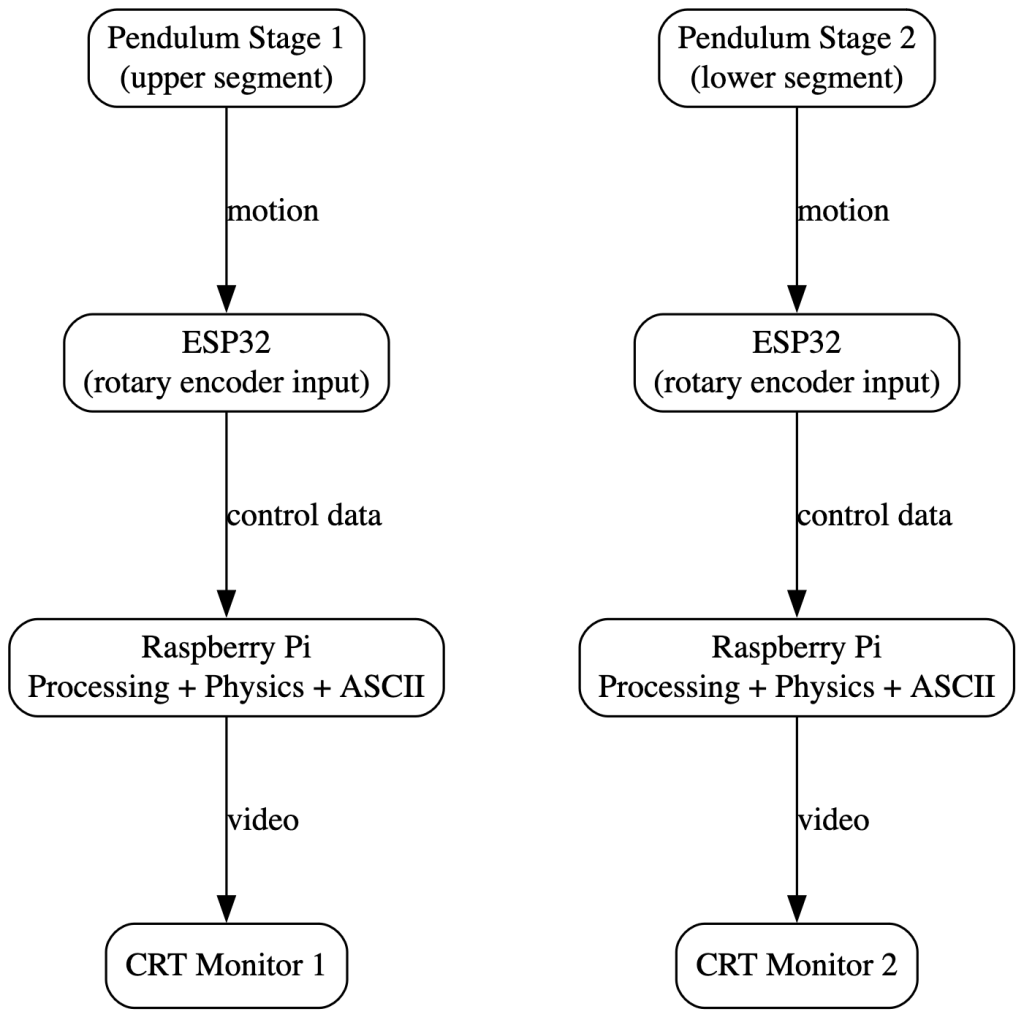
Snake Eyes is a participatory installation in which visitors set a physical double pendulum into motion. The pendulum’s chaotic movement is translated into control data that drives a real-time generative animation system. As the pendulum swings, subtle variations in its motion perturb a physics simulation written in Processing, producing evolving ASCII animations on dual CRT monitors. Chaotic movement materializes as dense constellations of text that gradually erode into stillness as the system loses energy.
Aubrey Birdwell is a new media and installation artist whose practice merges post-digital aesthetics, computational processes, and media archaeology. His work explores architectures of language, disappearance, and digital decay through hybrid systems of light, code, and material. He holds an M.S. in Computer Science from Georgia Institute of Technology and a B.A. & B.S. dual degree from The Evergreen State College. https://www.aubreybirdwell.com/
Resonant Fields
Raiffe Colero + Studio
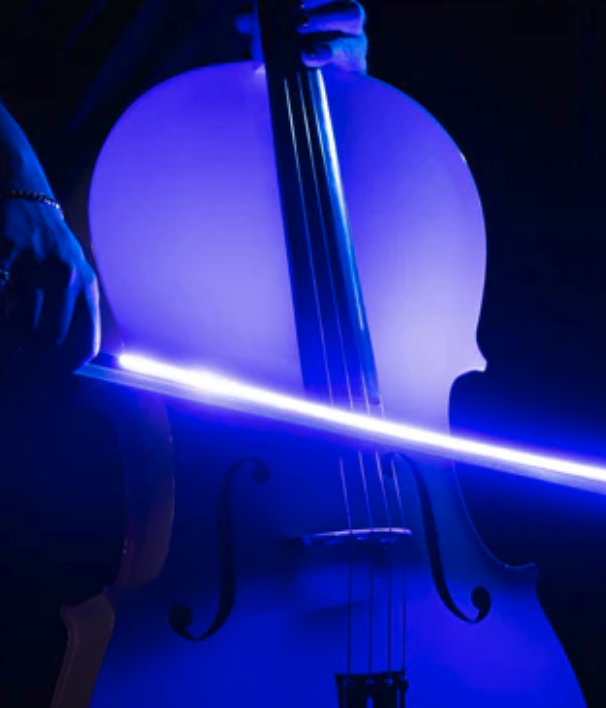
Resonant Fields transmutes the raw, analog signal of a live cello performance into a kinetic, three-dimensional architecture of fiber-optic light. Our team of interdisciplinary artists, engineers, and hardware designers will construct an audio-reactive LED matrix that breathes with the performer, turning the gallery space into a living, responsive instrument. By mapping musical frequency to generative light patterns, we bridge the gap between classical acoustic performance and immersive, data-driven installation art. This project serves as a live, experimental proof-of-presence, allowing the audience to witness the invisible data of music take tangible form.
Our team is a transdisciplinary collective of strategists, engineers, and designers unified by a passion for transmuting complex data into visceral human experiences. Raiffe Coléo leads as the visual artist and strategist focused on structural clarity, partnered with Daniel, whose background as a software engineer and electronics specialist drives the installation’s core intelligence. This collaboration is anchored by a hardware designer and creative who masterminds the physical assembly, alongside a virtuoso cellist who provides the dynamic, analog input that animates the fiber grid. Together, we bridge the gap between technical function and evocative performance to build an audio-reactive installation that operates at the cutting edge of art and technology.
Digital “Little Free Library” for Sharing Art
Kirk Holland
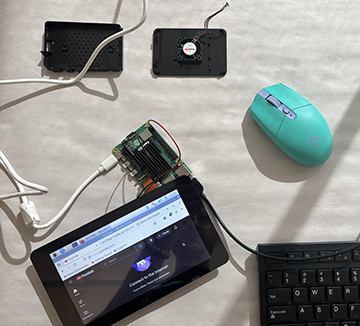
An interactive device for fun and meaningful digital interaction at ElectricSEA. I have built one device already and will be using the hackathon to demonstrate the build of another: “Little Free Library” but for the sharing of digital art (download/upload your art as shareable wallpaper) and/or a Digital Guestbook for sharing contact information and leaving video messages and/or photos and notes at the event.
I am a 45 year old visual artist from Auburn, WA that went back to school for UX/Interaction Design four years ago and am working on my BFA Capstone Project with Jeff Brice as one of my instructors at Cornish College of the Arts. As a visual artist, I exhibit my paintings in coffee shops, bodegas, and hair salons (sometimes along the various Seattle art walk circuits). I am very interested in using this hackathon to work on a public facing interactable device for art walks, art/tech events, or as a permanent installation to bring the artists of our community together through sharing and collaboration. https://www.instagram.com/kirk.holland.design/